

My Mobile Day - The Daily Pains of the Digital World
- Emma Leishman
- Feb 6, 2022
- 5 min read

From the moment I wake, until the moment I fall asleep, my phone is with me. It’s come to the point where I’ve started to lock myself out of certain apps so that I can get on with my day and not waste hours upon hours on social media. The same goes for most, with the “average Canadian spending roughly 2.48 hours per day on their phones.” (Statista, 2021). Clearly, mobile phones have become an addicting feature of our everyday lives, especially as they become more intuitive, user-friendly, and fun to be on. As an exercise in customer journey mapping, I wanted to paint a picture of how my phone is integrated into my daily routine, how it shapes what I do, see, feel, think, and why (as a marketer) this journey is important and could be improved.
Morning Routine
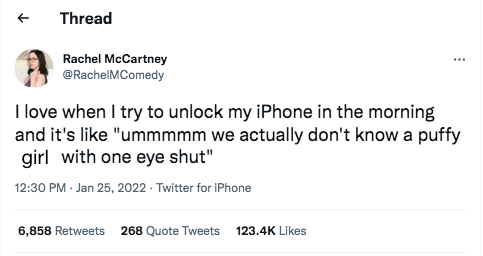
That tweet basically sums up my daily morning routine. I wake up and immediately check my most-used app, the messages app, and then I go right to Twitter. I check my messages app immediately to answer the texts I received while I was asleep or the ones that I didn’t respond to the previous day, an ‘I want to connect’ micro-moment for me.

On this particular day, I woke up to a friend of mine texting me about the Leaf’s game the night before and how Mitch Marner had just extended his goal streak to seven games, a career high for the all-star hockey player. I use the messages app the most out of any other app, especially since the beginning of the pandemic, to connect with my friends and family members. The messages app allows me to connect and communicate with those in my circle, both quickly and effectively, which is an invaluable asset to me.

Next, I immediately turn to the Twitter app to look at the Mitch Marner news and any other news that’s come out in the morning that I should know about. I don’t necessarily go on Twitter every day, and it certainly isn’t my most used app, but it’s definitely one of my favourites. I went on Twitter this morning because I wanted to learn about statistics that people have tweeted about Mitch Marner and highlights from the game last night. Twitter provides me with immediate and viable information about the world and has become my primary news source. However, one pain point for me is how flooded the app has been with the promoted tweets from Crypto.com. It’s extremely annoying to have to sift through and has caused me to block the Crypto.com account so that I get less (or none) of their content.
My Entertainment for the Day


I barely go anywhere or do anything without music or a podcast playing. So later that day, I turned to the Spotify music app to play some of my favourite tunes while I worked. The Spotify app fulfills my “I want to relax” micro-moment as it helps to calm me down when I can tune out the world and zone into my music. However, today when I opened the Spotify app and clicked on the song I wanted; the music didn’t play. Not that this is a difficult thing to fix, but it definitely is a pain-point for me as a user. It hinders my user experience by prolonging the time it takes for me to reach my user goal. Not only that, but it frustrates me, which is the opposite of what my micro-moment is set out for, which is to relax. This often causes me to turn to a different music app instead.

I often get bored of listening to music for too long, so today I ended up switching over to the podcast app on my iPhone, which is another one of my frequently used app. It’s an app that often inspires me, gives me good creative ideas, and makes me think outside of the box. I wanted to get inspired, so I started listening to one of my favourite micro-influencers, Margot Lee, who talks about working in digital media marketing. As her episode came to a close, I experienced another mobile friction moment. The app started immediately playing Margot’s episode that came out before the one I had just listened to, which I had already heard. I really don’t like that the app immediately plays the episode prior, unless you create a queue. I wish that the app would just play the next episode in the list, and by creating this pain point for me, I’ve started using other platforms that have my podcasts on them.
It's All About Convenience


In the evening, my boyfriend and I decided we wanted to go to the movies, so I immediately turned to the Safari browsing app, one that I use very frequently, because I wanted to know which theatres were open, what movies were playing, and when. The Safari app is extremely useful for me because whenever I have a question about anything and I need an immediate answer, it provides that for me. It’s all about convenience. However, the search I made on Safari created another pain point for me. A lot of businesses, including movie theatres in Toronto, don’t have their hours updated on Google due to the constant changes with the COVID-19 restrictions. Consequently, it was really hard to tell what movie theatres were actually open and just hadn’t updated their information on Google yet. This dissuaded us from going to the Cineplex near us, especially since they didn’t answer the phone when we called, and we went out for dinner instead.
User Experience Matters

In my day-in-the-life customer journey with my mobile device, it becomes clear that some of my favourite and most-used apps give me pain points that hinder my ability to meet my micro-moment goals, which oftentimes are caused by a poor user experience. These pain points often lead me to close the apps for a short time and often cause me to abandon the final steps of the marketing funnel when interacting with brands, the purchase and conversion process. My favourite apps also often frustrate me to the point where I close the app and use a different one that has the same functions and is more user friendly, damaging my loyalty to the app and the brands that I encounter on them.
Takeaways
With all that being said, many of my pain points I experience seem easy to fix and would make a huge difference in my user experience. Things like a different way to integrate paid advertising in the Twitter app, bug fixes on the Spotify app, making the podcast app more personalized, and updating the information on the Safari app. All of these changes would improve my customer journey by anticipating and recognizing my impending behaviour and changing the functionality of the apps accordingly. Overall, by creating a more seamless user experience, like how the messages app is for me, I would become a more loyal user than I already am. Not only that, but I would be more willing to advocate for these apps and the brands on them, creating more awareness and potential consideration for them.
References
Statista. (2021, February 19). Average daily mobile internet usage in Canada 2020, by language. https://www.statista.com/statistics/443100/daily-mobile-online-usage-canada-language/


Comments